Film and Costume: Sari On Screen
Creating the image of a “Indian women” further who wears the one and only Nivi drape was Indian cinema. As Mumbai became the home for film production and studios were able to be set up by the 1930s, the young beautiful and ideal Indian women was created wearing the latest in fashion and textile
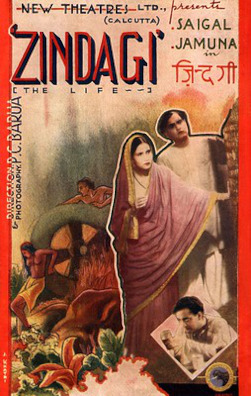
In “Zindagi” (1940) lead actress Jamuna is portrayed as a struggling and besotted women through her character but that doesn’t stop her from wearing Nivi drape saris with embroidery lined up which you can see even in the black and white screen. The movie poster was the only thing you had to show color, which for Jamuna was wearing subdued red that showed her respectability.
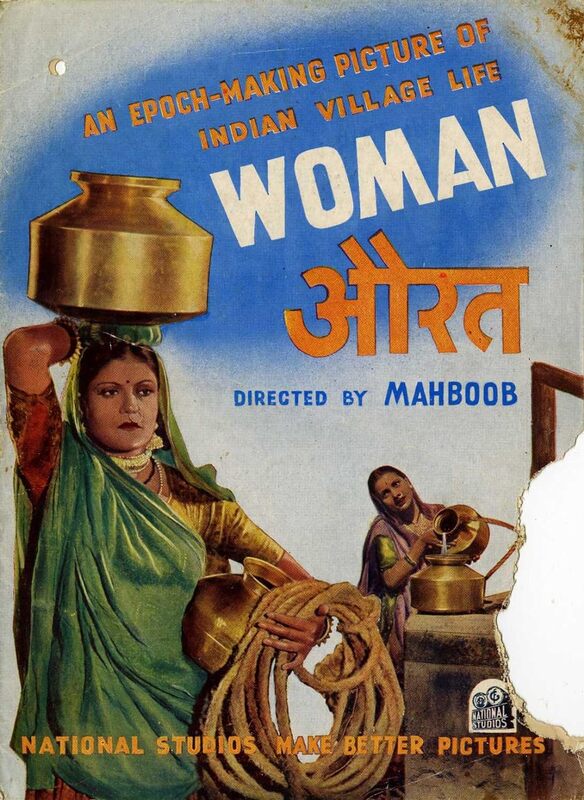
In some specific movies, the actresses are not wearing the latest sari style such is the case for “Aurat” (1940 ) a film about the poor women’s struggle. The actress, Sardar Akthar is sporting a lengha-choli , a 3 piece ensemble with a skirt that is worn in many rural villages throughout North India throughout the movie, with a limited number of costume changes. This fashion choice was purposely done to give the actress more realistic depth to her character and connect with rural India.