Modernity and Nationalism
The use of the Nivi drape and the Nivi sari however was accelerated in the 1930’s under the several nationalism based independence movements. Jnananandini’s husband Jyotindra Nath Tagore , a core part of the independence movement in Bengal, suggested redefining clothing as a symbol of identity.
The leaders during the time wanted to find a way to “create a dress for middle class Bengali women that would distinguish them from prostitutes and laboring women, at the same time that dress would not resemble European male attire” (Bahl 2005).
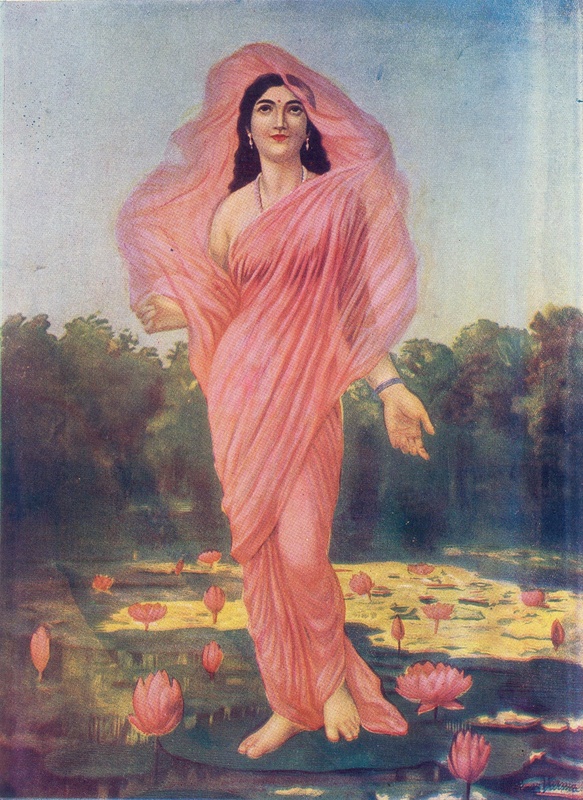
This was the negotiation that was taken by several Indian leaders in of combining modernity in with classic Indian tradition to create the “new women” who was capable of being outside the home and keep their modesty/respectability as a upperclass women intact .
No doubt taking inspiration from Mrs.Tagore , the sari now stylized with a formal blouse, and assuming a petticoat underneath would become the face of all upper class women who are quintessentially marked as Indian and traditional but respectable enough to participate in public spaces (Bahl 2005). The Nivi drape thus would become the symbol for independence within Indian womanhood .