A "New" Saree Style: Nivi
The start of the most popular current drape in India now is called the "Nivi" drape. The journey of the Nivi drape starts off with the fashion styling of Parsi community in Mumbai.
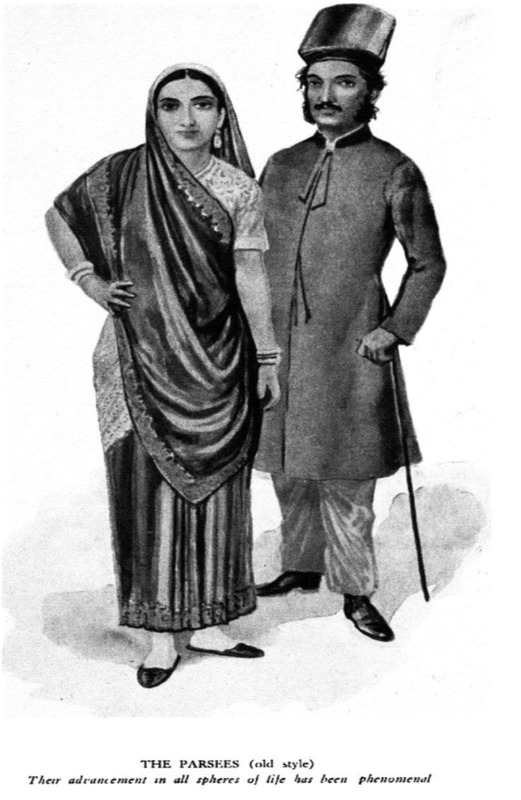
The Parsis are a minority community of Persian migrants practicing Zoroastrianism who settled into the state of Gujrat. They are labeled as “Parsi” the Sanskrit rendition of Persia, their previous homeland they left for and found in current state of Gujrat circa 10th century .This community moved in droves to Mumbai in the late 1700s and became the lead commercial group to engage with Western and intentional merchants (Karaka, 1858).
Their style of dress from children to adult women and men showcased their religion and culture as seen through this picture with the women wearing a religious headcover underneath their sari and use of white as an exclusive color.
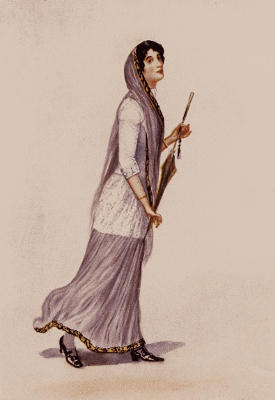
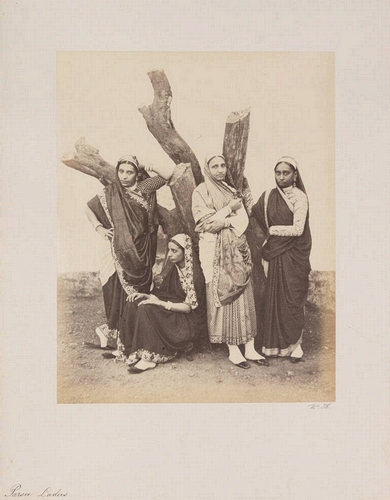
The major development for women was the making of the Parsi Gara Sari. The Gara sari refers to the layer of embroidery using a Chinese textile called gaaj (Elle India,2022 ) . This layer was exemplified along with the Parsi’s making of the “Kanchari” (Karaka, 1858), which can be deduced as one iteration of the choli (MAP Academy,2022) . The Kanchari mimicked British blouses to fashion it into a western style blouse to be worn underneath their Gara sari serving as a full blown bodice .
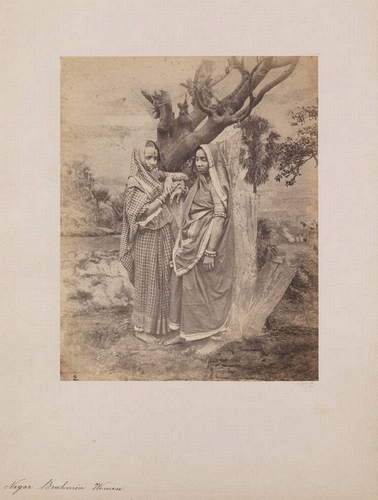
The Parsi's style of drape came from their home state of Gujrat where they lived prior to a mass migration to Mumbai during the British's renovation of Mumbai as their main port city (MAP Academy, 2022). This photo shows that the drape was around the left shoulder and covered the head as a sign of respectability .
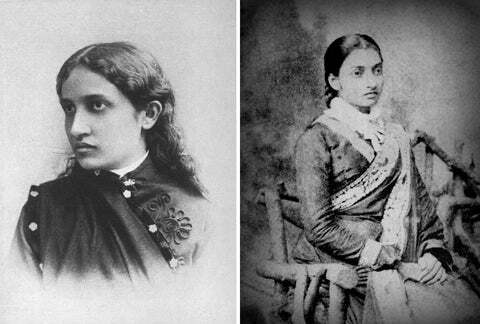
Jynandanandini Devi Tagore is most credited to having created the modern "nivi" drape. The story goes that went with her husband on a tour of Mumbai and upon being denied entry to British club due to not wearing a proper undergarment under her sari, leaving her bare breasts to poke out of the sari as was the cultural norm in Benegal, so she took it upon herself to never have to face rejection again by introducing the blouse into the Bengali sari . While this story cannot be officially sustained by any historical records, Mrs.Tagore can be certain to be especially influenced by Parsi sari’s as shown as she went home to Bengal and immediately started sporting her new creation, the Nivi drape.
The sari included a blouse, a garment to be placed like a choli underneath the sari and the sari was pleated several times around a thin piece of fabric referred to now as a petticoat then thrown over the chest and around the right shoulder, leaving the tail end hanging in the back(Miller and Mukerjee, 2003).
This style has been named “Nivi drape”, meaning new as Mrs.Tagore would become a fashionista as she taught classes of how the wear the Nivi sari and spread it around her immediate social circle(Green, 2020).