
Browse Exhibits (11 total)
There's No Underwear in Space: The Sexualized Space Woman

Exploring the ways that space clothing has evolved for women in the Star War's universe.
From the 1970s until now Hollywood has been facinated with telling the story of Star Wars. Space is the new frontier and there is so much freedom in character design. Throughout the series we see women represented as badass heroes ready to fight and save the galaxy. However, throughout most of the early films this women are represented in costumes that highlight their body more than their ability to fight.
The costumes of these galatic badasses have now become iconic-- and somehow even more sexualized than when they first arrived in movies.
This exhibit explores how the women in Star Wars are both badasses and sexy and how throughout the decades the focus shifts from from one to the other.
(Re)making of the Modern Sari
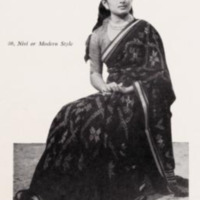
Sari is iconic in its representation of Indian culture. The garment which is 4-9 yards long, has been draped to a women's body for the last 3000 years .
However, the modern sari as we know it has gone through many evolutions. , it is not the same garment as it was 100 years ago or even 10 years ago.
I will focus on the time period of late 19th century to early 20th century as the sari navigates the transition from British Raj to Independent nation state of India. Cultural influences and societal change from these political transitions highlight and morph the sari into the symbol that it is today.
I became curious about this topic once I learned that some Indian social media influencers are forgoing the blouse as a part of the sari for its connection to British colonization over India. Intrigued, I started this project to see how "Indian" this garment was.
My research for this exhibit has shown me that the sari is made/unmade and remade with the influence of different cultures and values as the governing body of India has changed. Outfitting the Indian women is a reflection of class and societal ideals. Marking that transition is the advent of the camera, and the introduction of cinema, which has propelled themes of identity, nationalism and ideal femininity. The dialogue between regionality (defining Indian states as a ethnicity) and nationalism is clearly seen through the influence of one sari draping technique to the next and shows caste/class differences.
The sari thus is an active and dynamic garment that alters and contours itself to the Indian women's body as a reflection of what it means to be modern, allowing history and culture to be embodied through it's textile , material, and technique of wearing.
Becoming the Collective: Loss of the Individual Through Concert Dress
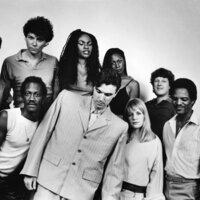
In 1983, Talking Heads filmed a concert film at the Pantages Theatre in Los Angeles, California. Filmed at the culmination of their tour for their album Speaking in Tongues, the film quickly became a cult classic upon its release in September of 1984. One of the most enduring images from the film is of Talking Heads' lead singer, David Byrne, in a big suit designed especially for him to wear during the tour. Despite these images, Byrne had attempted, through the clothing he and the band wore throughout the rest of the film, to curate an image of a band that was a collective rather than a group of individuals. While this ultimately failed at this juncture because Byrne wore the big suit and other band members wore clothing that did not fit into the neutral aesthetic he was attempting to curate, Byrne has since perfected the ability to lose the individual in the collective of a band.
In this exhibit, Byrne's attempts at creating a collective are traced from the early days of Talking Heads to the present. The media included is early footage of Talking Heads playing at the Kitchen in 1975, Stop Making Sense (1984), David Byrne: Live in Austin (2007), and David Byrne's American Utopia (2020). Byrne has spoken extensively about his hopes of showing a collective onstage, and this exhibit draws from his own words in interviews and the cinematic sources that show his attempts. It traces his fashion choices from simply dressing "preppy" during the early days of Talking Heads to tailoring his entire band in the same suit, as he did during his show on Broadway, including the version that was filmed by Spike Lee in 2020.
In tracing Byrne's attempt to unify his band into one, the exhibit also examine his motivation for doing so. The exhibit attempts to answer why a lead singer may want to appear equal to his band and show them as a collective rather than a group of individuals. Additionally, the exhibit explores the greater ideals that Byrne expressed in his latest tour, Broadway show, and film, American Utopia, which indicates why he is interested in pursuing collectivity and shedding individualism.