Kerala Sari: Regionalism to Nationalism
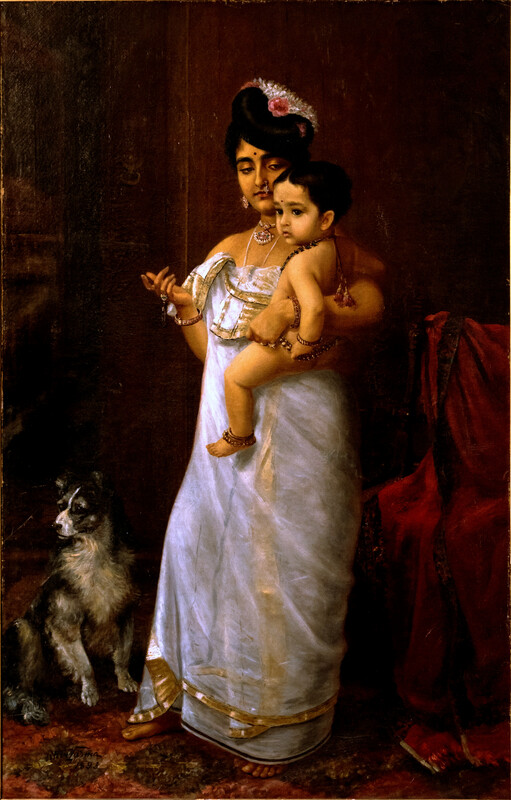
The Kerala sari called Mundum Neriyathum was worn without choli or blouse and was a 2 piece ensemble , where the “mundu” acted like the antariya and the neriyatha was the upper garment both draped around the body starting in a circular motion forming a single uniform look (EIA Editors, 2022 ).

But that was a privilege only known for upper class women. In the second painting by Mr.Verma shows his wife in the traditional outfit holding their child, evidence of his own family's culture and status. 
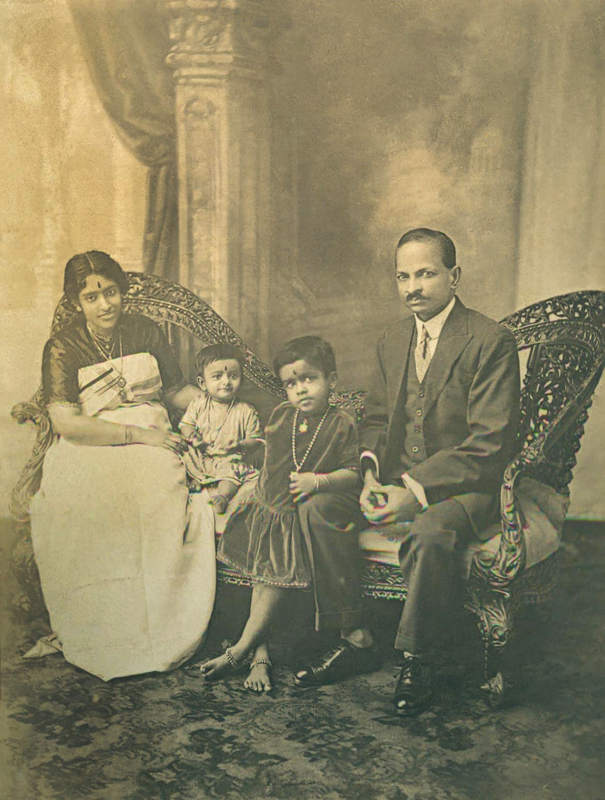
 The Mundum Neriyathum eventually would  be worn with a blouse and be draped Nivi style as shown in this photo of the last Queen of Travencore, a part of Kerala’s old monarchy system Kingdom of TravenCore, showcasing the blouse and petticoat as incorporated into the regional style. 
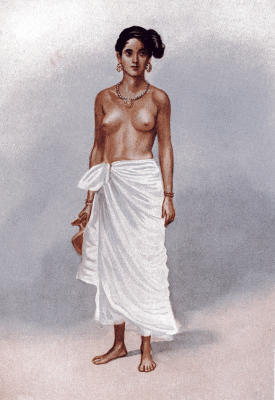
The bare breast fashion of the past was found in Kerala's lower class women who were not allowed to wear the Mundu sari over their torso because that was a right only meant for upperclass women. Painted in 1920, this shows that for a small population the blouse was not apart of the attire for some women. This would change in the 1950's as India recommits itself to it's national identity specifically within the use of the Nivi sari that must be come with a blouse to cover the top and petticoat to support the bottom of the sari.

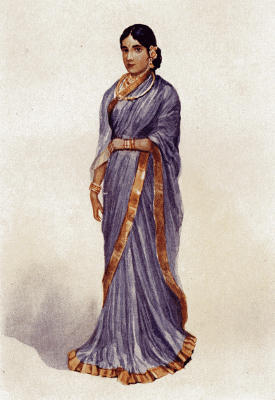
Titled " Lady from Mysore" in Otto Fieldman's "Women in India" book, this sari is very evidently Nivi style as shown through the women's textile use of a shimmery sari and hairstyle all sporting a "modern look". Mysore is a city in Karnataka, South India and since this was painted in 1920 by artist M.V Dhurandhar we can conclude that the spread of Nivi sari  went beyond Mumbai and Mrs.Tagore's influence .Whether through the need for the latest fashion by upperclass women or the pressure of nationalistic movements, or a bit of both social phenomena.