For a month, I wore nothing but the clothes I made- including undergarments. I only learned how to sew the month prior. I did this for my capstone project. While sewing my clothes, I explored theories and philosophies related to fashion. One of my first inquiries was: what do my clothes say? Of course, I turned to Roland Barthes, who first theorized about the language of fashion, to ponder this question.
Barthes theorized that all clothing communicates. In The Semiotic Challenge, Barthes stated, “Semiology, therefore, propounds the very persuasive idea that everything is a text that can be decoded as a sign and, moreover, that the signified object is not like a single word, but rather a sentence in its own right” (186-87)1. Not only do clothes speak, but they perpetuate narratives, myths, and social constructs.
Answering the question of what clothes communicate, Judith Butler says power relations and gender (even if we try to subvert it). She explains, “Bodies are unintelligible without the imaginary schema that makes them available to us… Since it is only available through this schema, the body is hopelessly caught up in language, signification and the cultural realm” (Wissinger 288)2. Without social constructs and language, bodies are unintelligible. Furthermore, bodies and fashion are inseparable because it is through fashion that we perceive our bodies.
My clothes uniquely blurred the line between fashion and body because they came from my body: my mind and my hands. I want my body/clothes to express what I think about- making a positive impact through fashion. Upcycling makes a positive impact on its own, and I created my clothes through upcycling. Nevertheless, I want the style to convey uplifting messages, too. However, as I designed, I did not focus on what message I wanted a specific garment to say; it was enough of a challenge to make the garment. I relegated the process of communication to the subconscious.
In Slaves to Fashion: Black Dandyism and the Styling of Black Diasporic Identity3, Miller demonstrates that Black Dandies are experts at communicating positive and impactful messages through their styles. So, even though most fashion communicates subconsciously, it is possible to communicate consciously and even persuasively through fashion.
Miuccia Prada recently acknowledged deeper messages communicated through fashion when commenting on Prada’s Fall 2025 collection, “For me glamour is not a sexy dress, it’s the opposite. It’s an interior point of view where you feel important” (i-D)4. One may put on a sexy dress, but if they don’t feel confident, if their body language is self-conscious, then the dress will also communicate insecurity. Therefore, her collection communicates prioritizing the personal positive feelings of the wearer over external validation or the male gaze. These days, the pressure to appear “perfect” is exceptionally high since the online world of images and videos surrounds us. Therefore, Prada’s message is timely: how we feel is more important than what other people think.
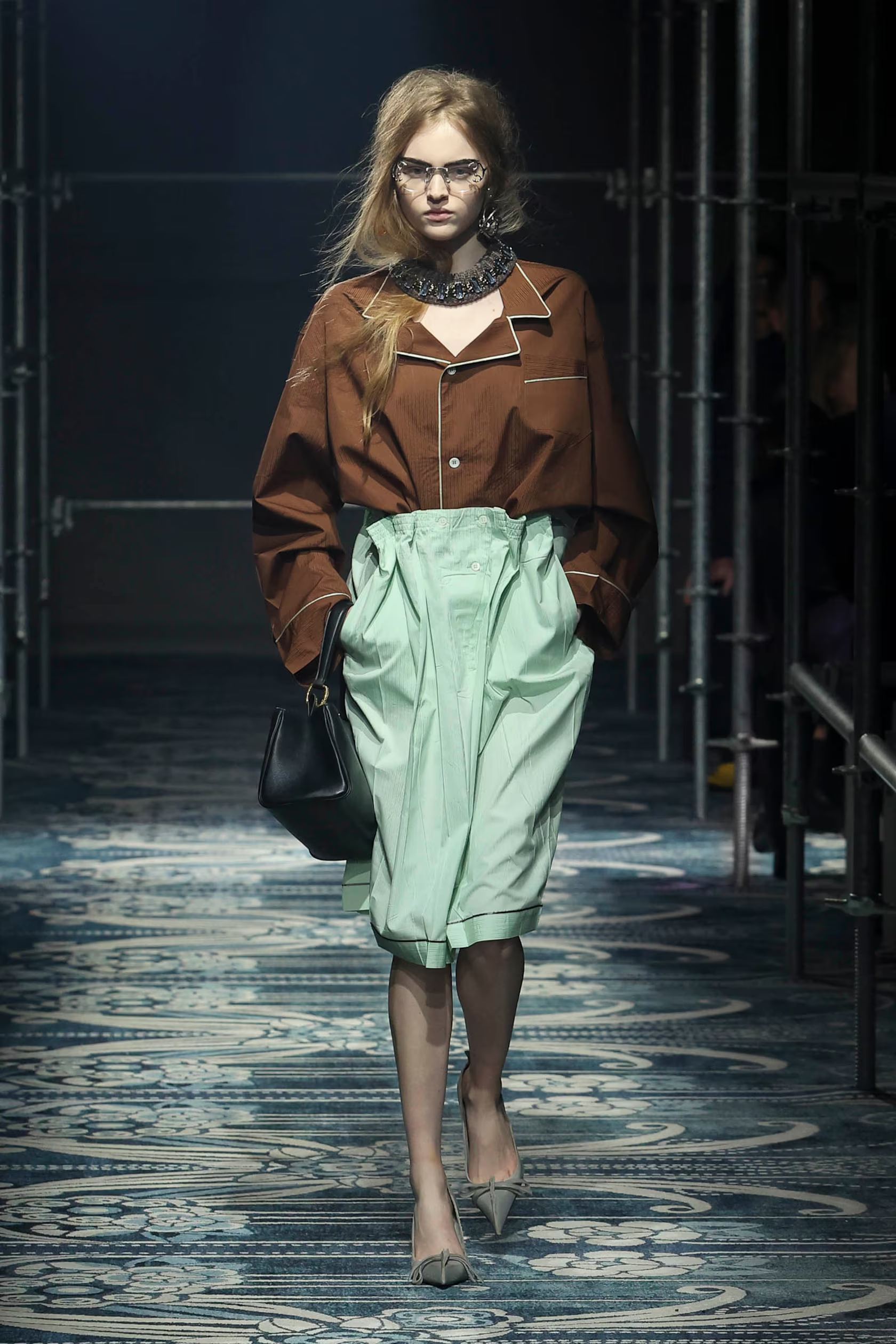
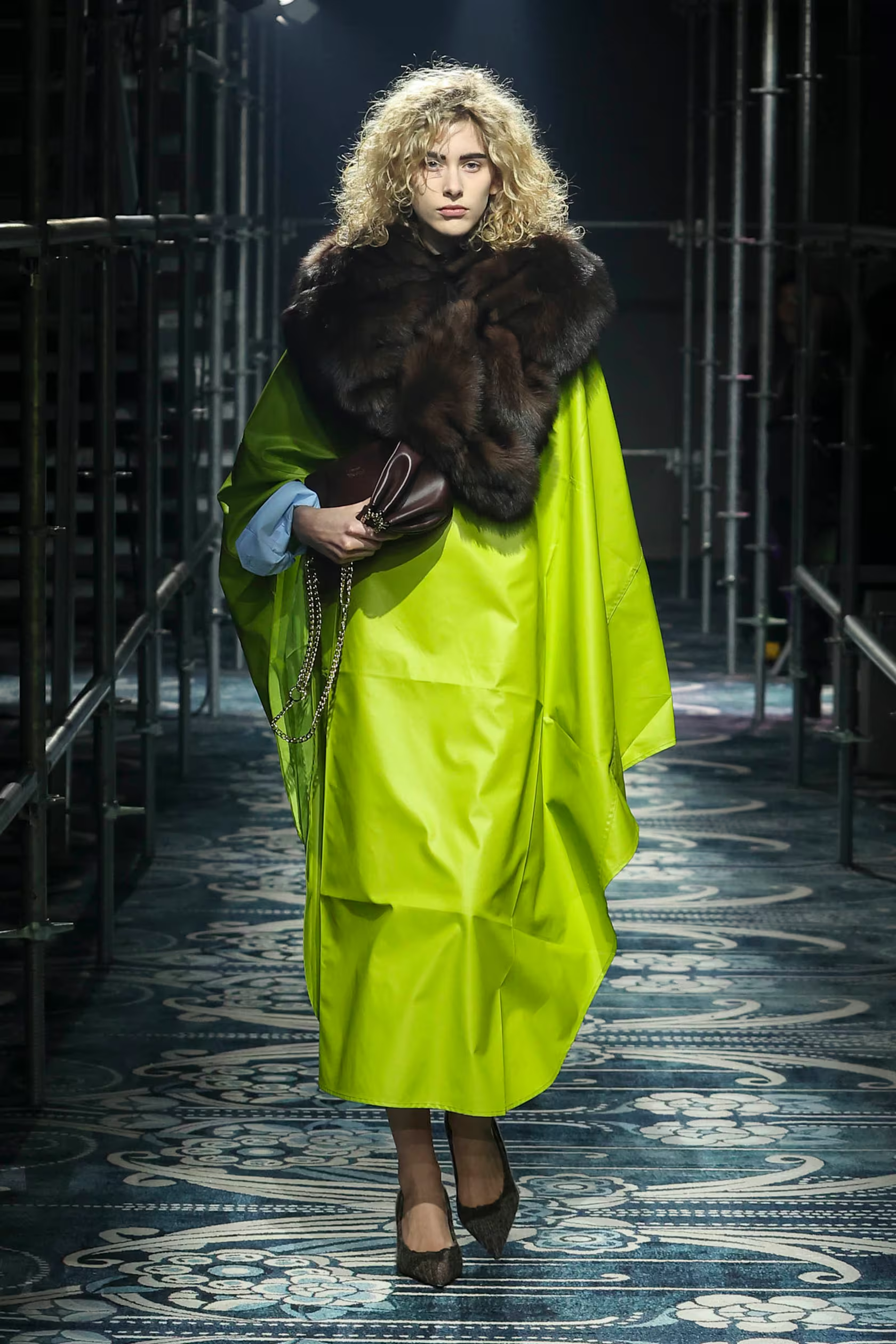
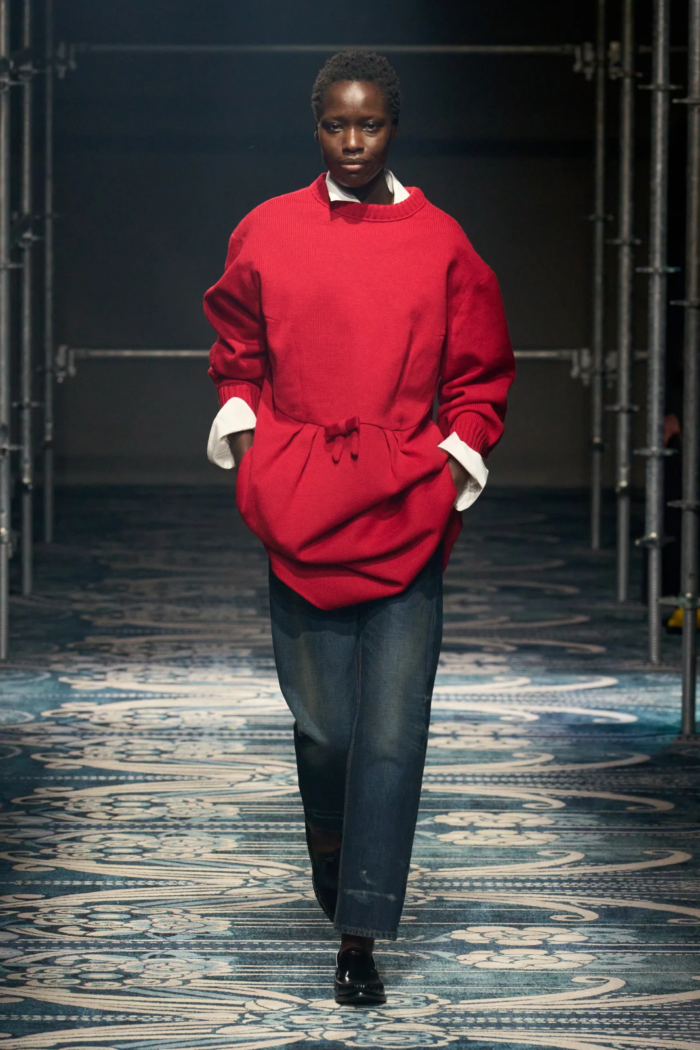
Even when consciously speaking through clothes, how others perceive the clothes is beyond the wearers’ control. Therefore, as Barthes pointed out, words go with fashion to create “total fashion.” “Without discourse there is no total Fashion, no essential Fashion” (The Fashion System xi)5. Without discourse, we don’t know the details of clothes and miss the complete picture of what a garment says.
So, upcycling expresses a positive message because it is an ethical fashion choice. I have deeply considered my beliefs, so subconsciously, my clothing should communicate positive messages. But I still need to articulate what they are saying.
There is a playfulness to my designs; I mix patterns, add sequins, and do not always hide seams. Play beckons community; it is more fun to play with friends than to play alone. Therefore, my fashion also says, “Join me; let’s create together. Let’s forget the rules and follow our instincts.”
I will be sharing more of my capstone project in the following weeks. Follow along to find out more!
- Barthes, Roland, et al. The Semiotic Challenge. 1. California paperback print, University of California Press, 1994. ↩︎
- Wissinger, Elizabeth. “Judith Butler: Fashion and Performativity.” Thinking through Fashion: A Guide to Key Theorists, edited by Agnès Rocamora and Anneke Smelik, I.B. Tauris, 2016. ↩︎
- Miller, Monica L. Slaves to Fashion: Black Dandyism and the Styling of Black Diasporic Identity. Duke University Press, 2009. ↩︎
- i-D. Instagram. 27 Feb. 2025, https://www.instagram.com/p/DGlYLXJJeBO/?igsh=QkFGNnpQdXFxNQ%3D%3D. ↩︎
- Barthes, Roland. The Fashion System. Nachdr., University of California Press, 2006. ↩︎

