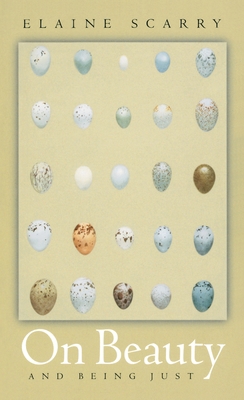
On Beauty and Being Just by Elain Scarry is a meditation on the meaning and usefulness of beauty for everyone. I use her definitions of beauty, as well as my own exploration of the subject from my previous article, “The Absence of Beauty,” as a foundation for the following article. From this understanding of beauty emerges a path to revolution.
Elaine Scarry writes, “Beauty is the starting place for education” (31). So, I invite you to take a deep breath. If you, like me, are a lifelong learner who feels stressed with all of the demands of life, let us return our focus to beauty so that we can approach our learning journey and all that lies ahead of us refreshed. Picture yourself surrounded by the most beautiful scenery; perhaps it is the scenery that first inspired your education. Allow yourself a moment to focus on what is beautiful.
I notice that I slow as I think of beauty. My breathing, thoughts, and writing slow. They become more deliberate. Small movements are sufficient. It disrupts the fast pace of life. Scarry describes beauty as energizing, and through peace comes renewed energy. As one concentrates on beauty, the unnecessary noise fades. Here we arrive, ready to begin again and continue education, discovery, creativity.
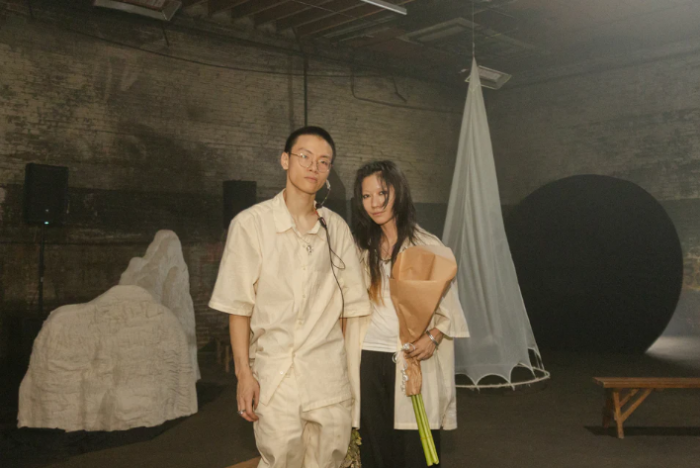
With beauty in mind, I approach the study of fashion. In contrast to fast fashion, accumulation, and keeping up with ever-changing trends, beauty aligns with slow fashion. Brands such as Wenjüe Lu seek to reshape the industry. Their mission is “to restore a sense of ‘slowness’ to the ever-accelerating world.” Therefore, they treat every piece they produce as an individual work of art.
Traditions of embroidering, quilting, and other sewing practices are passed down through generations, creating a slow art form that spans centuries. Stories are told again and again through these art forms. The seamstress communicates with ancestors and future generations, adding their own unique touch to what has come before and what will go beyond.
As beauty leads us to education, beauty further leads us to revolution. bell hooks said, “I celebrate teaching that enables transgressions- a movement against and beyond boundaries. It is that movement which makes education the practice of freedom” (“Teaching” 10). If our education does not break boundaries, it’s not free. Beauty forces us to confront the not-beautiful.
The not-beauty of the fashion industry comes from its role in neocolonialism. Not only is the Global South exploited for labor in the production of clothes, but it is also used as the dumping ground for textile waste. In Waiting for God, Simone Weil writes, “The love of the beauty of the world . . . involves . . . the love of all the truly precious things that bad fortune can destroy” (180). A love of beauty leads us to protect the planet and revolt against injustices.
Beauty leads us to protect life because, in all life, there is beauty. Therefore, observing true beauty reveals the falsity of the beauty standard, which does not support life. Instead, it supports the “imperialist, white supremacist, capitalist patriarchy” to borrow bell hooks’ term for the “interlocking systems” of oppression.
A focus on beauty is revolutionary. It is a revolutionary act to appreciate beauty, to celebrate the beauty of others, which, in fact, is constantly astounding. It is revolutionary to appreciate bodies and clothes. Those that fall outside the approval of the imperialist, white supremacist, capitalist, patriarchy are especially worthy of celebration.
https://www.instagram.com/reel/DBuhCVdOy90/?igsh=czBmYXg5OTN5OWk4
Bibliography
hooks, bell. Teaching to Transgress: Education as the Practice of Freedom. Routledge, 1994.
—. Writing Beyond Race. Routledge, 2012. DOI.org (Crossref), https://doi.org/10.4324/9780203108499.
Scarry, Elaine. On Beauty and Being Just. Princeton University Press, 1999. DOI.org (Crossref), https://doi.org/10.1515/9781400847358.
Weil, Simone. Waiting for God. Translated by Emma Craufurd, First Harper Perennial Modern Classics edition. HarperPerennial ModernClassics, 2009.
“Wenjüe Lu.” Wenjüe Lu, https://wenjuelu.com/pages/about. Accessed 27 Oct. 2024.

