
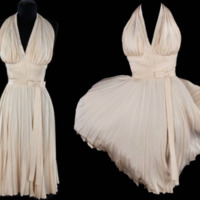
Marilyn's White Dress: Creating The Look
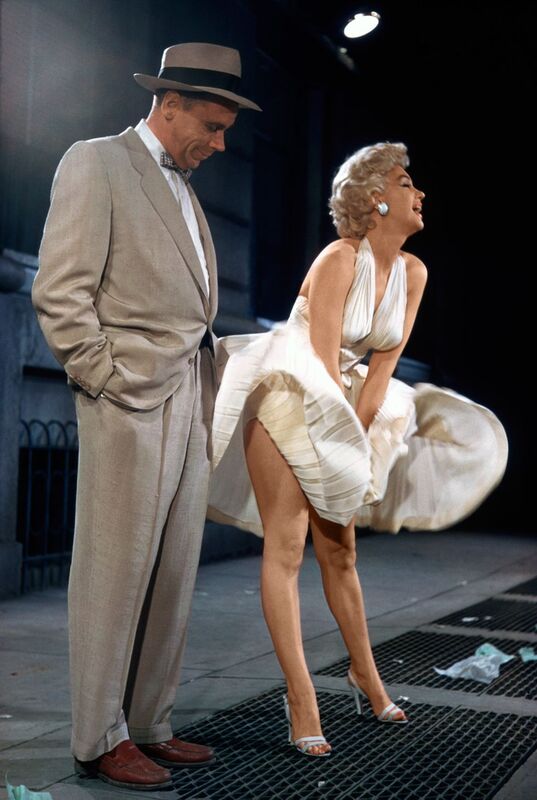
If you’re like me, you may have been too distracted by Marilyn’s dreamy performance—and Tom Ewell’s creepster leering—in this iconic scene from Billy Wilder’s The Seven-Year Itch (1955) to have noticed on first viewing that the white dress that’s the subject of this exhibit is never shown in its entirety. The closest to a full-length view is the medium long shot when Marilyn and Ewell are outside the cinema, walking toward the camera—Marilyn chopped off at the ankles. From thereon in her dressed body is bisected, decapitated, sliced off at the legs or just below the bust through a series of camera tilts and edits that follow Ewell’s—and the intended male viewer’s?—lecherous gaze.
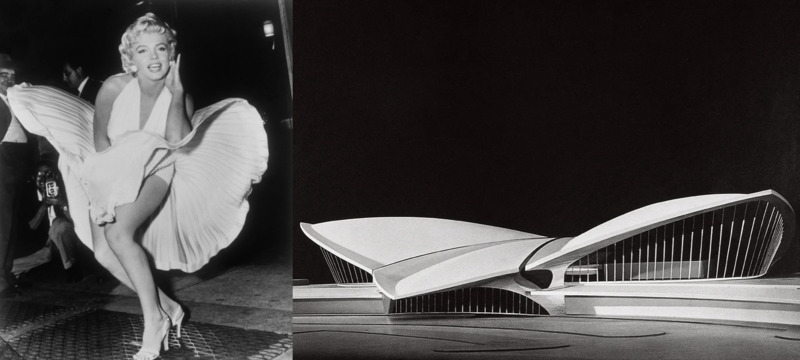
But it’s too easy to label this as one of the most famous cinematic objectifications of women…
What if there is a pleasure in the dress itself that transcends the male gaze—the pleasure of touch? Marilyn’s character is clearly enjoying the cool breeze from the subway on a hot, humid evening—facilitated by the dress she is wearing, of a particular shape and volume to collect and circulate the air, the skirt touching and then not-touching her legs.
It's also important to note that there were actually two scenes featuring the dress, both shot at the same time—the one directed by Wilder, and the press conference attended by thousands of fans and male photographers directed by, ahem, Marilyn herself. As Wilder shot fourteen takes of the scene at 2 am, in between Marilyn was posing for the cameras, crouching down with her thighs pressed demurely together, left hand framing her face, holding the skirt up to expose the entire length of her leg. The dress works on Marilyn’s body as she in turn manipulates the dress.
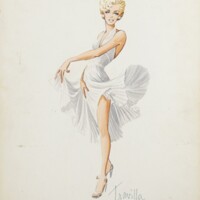
The accompanying videos and images further trace the genesis of Marilyn’s costume, and its impact during and after the performance.
In spite of the interviewer’s questions asked as if Marilyn were an unruly child at best and not quite human at worst—“Was she difficult?” and “She must have been an incredible creature” —Ewell shares surprising insights and a deep love and respect for his co-star in this 1984 interview. (And BTW, he didn’t want to gawk at her like that, but the playwright insisted.)