
Body Inclusivity
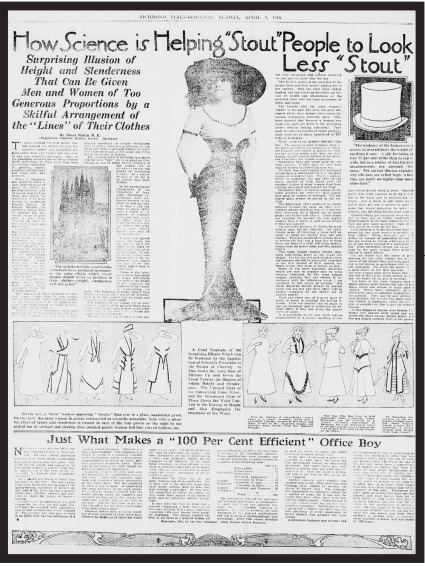
Though ready-to-wear clothing freed women from having to sew clothes for themselves and their families, and it democratized society because it prevented obvious class distinctions, the invention of standardized sizing, which made it possible to buy rather than sew clothing, meant that clothes never totally fit anyone. They especially do not fit bodies that differ from the majority. By not creating sizes that fit fat bodies, the fashion industry created a stigma against fat people, especially women.
Lane Bryant was one of the few brands who noticed the gap in the market and seized the opportunity. However, their philosophy for designing plus-size garments was to attempt to correct or disguise fat bodies. This perpetuated the new and mounting stigma.
At the turn of the century, women had more freedom in fashion than ever before because they did not have to wear corsets or heavy skirts for the first time in centuries. This corresponded with the freedom women were gaining in society. However, no sooner had they lost corsets than they acquired new rigid standards for their body shape. Women were now supposed to be thin and flat. Their bodies were expected to fit the clothes rather than the clothes fitting the body.